The Best Music to Learn Spanish
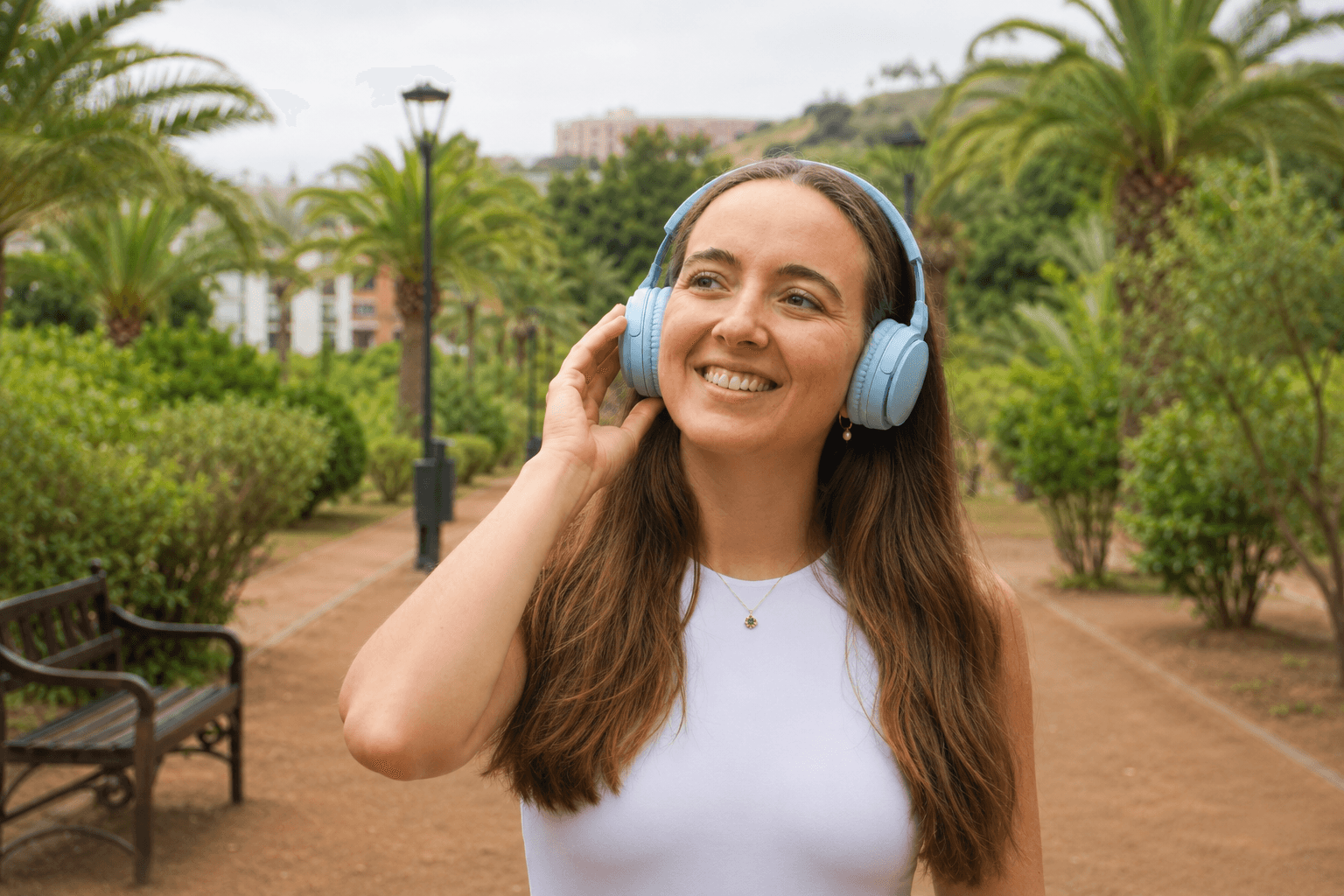
Learning Spanish doesn't always have to happen with textbooks or grammar exercises. Sometimes, it happens while you're driving to work, cooking dinner or going for a walk with your headphones on.
Music is one of the easiest ways to make Spanish part of your everyday life. But there's one important thing to remember.
Don't choose music because it's "good for learning"
Choose music because you genuinely enjoy listening to it.
If you love the songs, you'll naturally listen to them again and again. And that's exactly where the learning happens. The more often you hear the same words, expressions and sounds, the more familiar they become—without feeling like you're studying.
Listen to artists you already know
If you don't even know where to start, choose an artist you're already familiar with.
Shakira, for example, has many songs in both English and Spanish. If you already know some of her music in English, listening to her Spanish songs can make the language feel much more familiar—and much less intimidating.
You already recognise the melody, the artist's voice and sometimes even the message behind the song. That makes it much easier to focus on the language.
The same idea works with many international artists who record music in multiple languages.
Every genre can help
People often ask, "What's the best type of music for learning Spanish?"
The answer is simple: the one you'll actually keep listening to.
Whether you enjoy pop, indie, rock, flamenco, Latin pop, folk or even reggaeton doesn't really matter. If you keep coming back to those songs, they'll become part of your daily routine—and so will Spanish.
Don't worry about understanding everything
You don't need to understand every word to benefit from listening to Spanish music. In fact, trying to translate every line usually takes the fun out of it.
Instead, pay attention to words or phrases that appear repeatedly. Notice how native speakers connect sounds together, and listen to the rhythm and melody of the language. Little by little, your brain starts recognising patterns naturally.
Read the lyrics—and the translation
Once you've listened to a song a few times, look up the lyrics.
You'll often realise that you already recognise much more than you expected. The good news is that many websites don't just publish the original Spanish lyrics—they also provide translations into English and many other languages.
Whenever you discover a song you really like, spend a few minutes reading the lyrics alongside the translation. You'll understand the meaning much more easily, learn new vocabulary in context and start recognising expressions that native speakers actually use.
I personally used this technique while learning other languages, and it was a complete game changer. Instead of memorising long vocabulary lists, I kept coming back to songs I genuinely loved. Every time I listened to them, I noticed new words, expressions and pronunciation patterns without making a conscious effort to study.
The best part is that the next time you listen to that song, you'll recognise words and phrases you didn't understand before. And because you'll probably keep listening to music you enjoy, you'll review that vocabulary naturally again and again—without even realising you're learning.
Make Spanish part of your routine
The goal isn't to spend an hour analysing every song. The goal is much simpler: replace a few songs in your favourite playlist with Spanish ones.
Listen while you're driving, cooking, cleaning the house or going for a walk. The more often Spanish becomes part of your everyday life, the more natural it starts to feel.
Learning happens between lessons
Every song you listen to is another opportunity to hear real Spanish spoken naturally. Not because you're trying to memorise grammar or forcing yourself to study, but simply because Spanish has become part of your day.
Those small moments add up. One song becomes ten. Ten songs become hundreds of hours of listening over time. Little by little, you start recognising words, understanding expressions and feeling more comfortable with the language.
At Casalingo, we believe that real progress doesn't only happen during a lesson. It happens every time you find a new way to bring Spanish into your everyday life. Music is one of the easiest—and most enjoyable—ways to do exactly that.